The Buzz, the Mystery, and the Promise
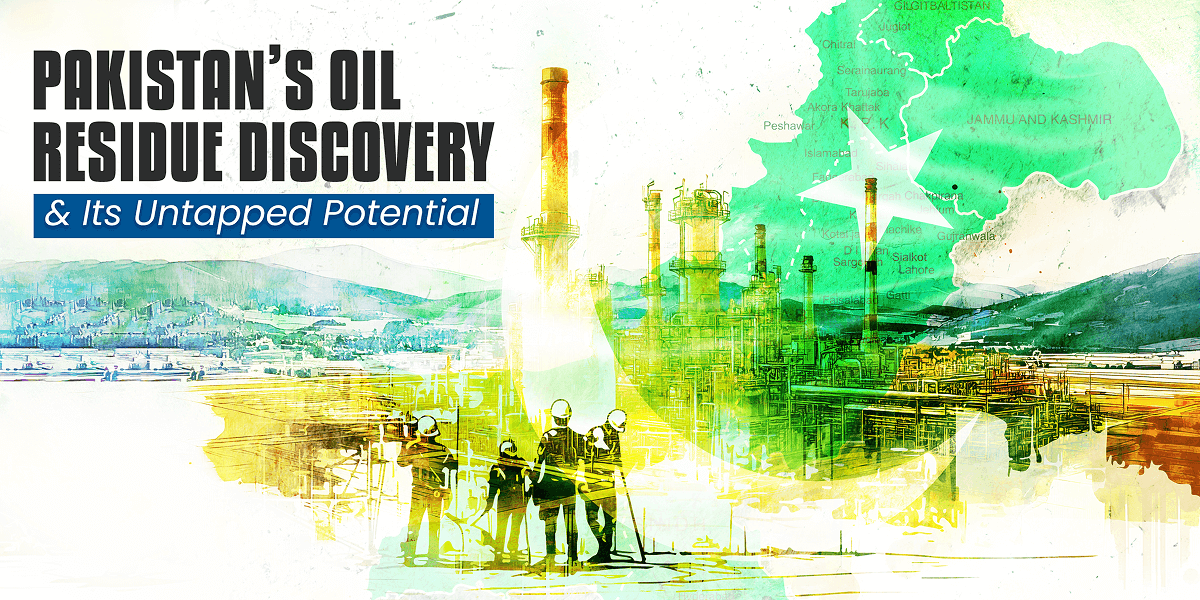
Over the past several months, headlines both local and global have exploded with talk of a new “oil-residue” discovery in Pakistan. Some sources suggest “massive untapped wealth,” while others—judicious geology aside—emphasize that the reality is more modest, though still significant.
In this blog, we’ll slice through the hype and deliver a compelling, trend-worthy exploration of what’s really been found, what “oil residue” means, and why—even if the prize isn’t yet clear—this still matters deeply for Pakistan’s future.
Between Headlines and Reality
In recent months, media buzz—including bold political statements—has spotlighted a mysterious “oil-residue” discovery in Pakistan. U.S. leadership has even referenced “massive oil reserves,” fueling speculation about Pakistan’s transformation into an energy powerhouse. But beyond the hyperbole lies a measured and evolving reality: a mix of new hydrocarbon discoveries, incremental production gains, and untapped potential that, while promising, remains limited by challenges.
What Does “Oil-Residue” Even Mean? Context Matters
The phrase “oil-residue” often lacks technical clarity. It may refer to natural surface manifestations like bitumen or asphalt, extra-heavy and viscous oil trapped underground, or simply by-products from refining. In Pakistan’s context, credible evidence points more to light oil and gas shows, not sprawling oil-sand deposits like Venezuela or Canada. Mix-ups between these concepts have fueled misleading narratives, even as actual finds deliver modest but real benefits.
Recent Discoveries: Layered Progress Across the Country
Pakistan’s energy narrative in 2024–2025 is shaped by a litany of discoveries:
- Soghri North-1 (Attock, Punjab): OGDCL drilled through Patala and Chorgali-Sakesar formations, achieving 13.95 MMSCFD of gas and 430 BPD of condensate—boosting confidence in further exploration. Daily Pakistan English NewsDawn
- Faakir-1 (Khairpur, Sindh): A milestone find yielding 6.4 MMSCFD of gas and 55 BPD condensate from the Lower Goru formation—underscoring Sindh’s onshore potential. Vibrant Pakistan
- Makori Deep-03 (Karak, Khyber Pakhtunkhwa): A formidable discovery delivering 22 MMSCFD gas and 2,112 BPD condensate, slated to begin production by August 2025. Sunray Solar
- Spin Wam-1 (North Waziristan): Mari Petroleum’s entry in the Waziristan Block with steady production of 12.96 MMSCFD gas and 20 BPD oil, projecting nearly two decades of supply. Sunray Solar
- Sanghar (Sindh): Baloch-2 well is operational, pumping 350 BPD oil and 50 MMSCFD gas. The country’s crude reserves jumped from 193 to 243 million barrels between late 2023 and mid-2024. RedditThe Express Tribune
- Bettani-2 (Khyber Pakhtunkhwa): OGDCL’s discovery in Lakki Marwat produced 2.14 MMSCFD gas and 74 BPD condensate—marking a first in the Sama Nasak formation. The Nation
These finds cumulatively reflect genuine growth: in FY 2024, reserves rose 26% for oil and 2% for gas, providing vital relief to Pakistan’s energy import burden. The Express Tribune
Offshore Dreams
Excitement has also centered on Pakistan’s offshore potential. A 2024 survey revealed massive reserves—possibly the world’s fourth-largest—in the Makran and Indus deepwater basins. In July 2025, Pakistan signed a joint offshore exploration agreement with Turkey via TPAO, aiming to explore 40 blocks. But such ambitions demand $5–30 billion in investment, years of development, and overcoming geopolitical instability.
Global Spotlight
U.S. declarations of a “massive reserves” collaboration injected volatility and expectation. While the EIA’s estimate of 9.1 billion barrels of recoverable oil they mention echoes frequently, proven reserves remain modest. Production is under 100,000 BPD—far behind global energy leaders. Security issues, red tape, and a history of stalled projects contribute to skepticism. The Washington Post The AP reported a trade agreement strengthening the U.S.–Pakistan energy cooperation but acknowledged separation in regions like Balochistan poses local resistance challenges.
Energy Benefits: Not a Gold Rush—but Real and Sustainable
Even though “residue” headlines are often inflated, the new finds provide tangible benefits:
- Import savings & energy security: Domestic gas and condensate help reduce dependence on LNG and crude import bills.
- Road materials: Local bitumen or condensate can support infrastructure without import reliance.
- Job & infrastructure: Exploration, drilling, and potential refining or blending operations generate employment and local development.
- Investor confidence: Sustained results, e.g., Faakir-1 and Makori, are building credibility for overseas and domestic investment.
Roadblocks Ahead: Realistic Caution
Challenges persist:
- Technical complexity: Heavy oils and bitumen require expensive thermal recovery or upgrading systems.
- Infrastructure gaps: Refinery retrofitting, pipelines, and export corridors remain limited—though projects like the proposed Gwadar Oil City ($10–12 billion) could change that horizon.
- Security concerns: Khyber Pakhtunkhwa, Balochistan, and tribal areas remain volatile, deterring major oil players.
- Governance & community engagement: Local grievances from past resource projects (e.g., Adhi field’s environmental impacts) underscore the need for ESG-focused development.
A Growth-Oriented Roadmap
Realizing Pakistan’s potential—without hype—requires a refined, phased path:
- Short-term (1–3 yrs): Appraise reserves via 3D seismic and pilot drilling. Use independent audit (SPE-PRMS) to validate findings.
- Mid-term (3–7 yrs): Develop moderate fields; upgrade local refineries; pilot steam or blending for heavier hydrocarbons.
- Long-term (7+ yrs): Invest in full-scale refining & export infrastructure (e.g., Gwadar Oil City) only once commercial viability is assured.
Key enablers include public-private partnerships, smart fiscal terms, ESG frameworks, local community benefit sharing, and integrated security policies.
Not a Fairy Tale, But a Promising Chapter
Pakistan’s recent onshore discoveries—Makori Deep-03, Faakir-1, Sanghar, Kohat, Latki Marwat—are real and meaningful. Yet, that doesn’t equate to an oil boom. The offshore promise remains unproven. Reality is one of cautious optimism: incremental gains, strategic partnerships, and transparent growth could gradually recalibrate Pakistan’s energy journey. Signature Rotana Islamabad brings you the trends—measured, factual, and forward-looking.